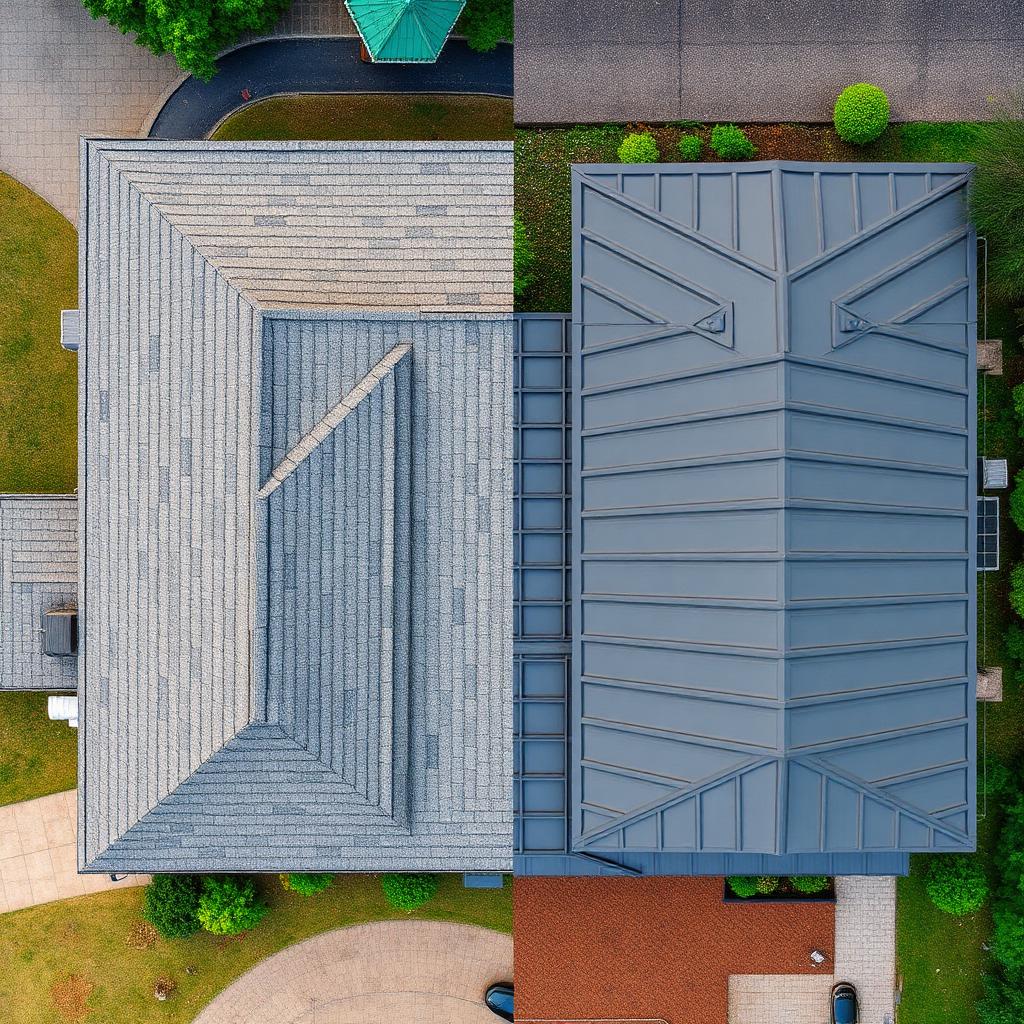
Roofing comparison

Metal vs asphalt roof: complete 2026 comparison

Choosing between metal and asphalt roofing? We break down costs, lifespan, energy efficiency, and resale value so you can make the right decision for your home and budget.

12 min read·Published July 2026
Based on 10,000+ analyzed quotes
Metal vs asphalt roof comparison

Key takeaways

Metal cost
$14K–$28K

Typical total

Asphalt cost
$7K–$12.5K

Typical total

Metal lifespan
40–70 yrs

2–3x longer

Energy savings
10–25%

Cooling cost reduction

Metal vs asphalt: quick comparison

Here's a side-by-side look at the most important factors when choosing between metal and asphalt roofing:

FeatureMetalAsphalt
Average cost (sq ft)$7–$14$3.50–$5.50
Total cost (2,000 sq ft roof)$14,000–$28,000$7,000–$12,500
Lifespan40–70 years15–30 years
Weight per sq ft1–1.5 lbs2.5–4 lbs
Wind resistanceUp to 140 mphUp to 110 mph
Fire ratingClass A (best)Class A to C
Energy savingsUp to 25% coolingMinimal
Noise in rainLouder (insulation helps)Quieter
Eco-friendly100% recyclableNot recyclable
MaintenanceLowModerate
Insurance discountOften yesRarely
Resale value boostHigherStandard

Cost breakdown: metal vs asphalt

Understanding the true cost requires looking at materials, labor, and long-term expenses:

Metal roofing

Materials per sq ft$4–$8
Labor per sq ft$3–$6
Total per sq ft$7–$14
2,000 sq ft roof$14,000–$28,000

Asphalt shingles

Materials per sq ft$1.50–$3
Labor per sq ft$2–$2.50
Total per sq ft$3.50–$5.50
2,000 sq ft roof$7,000–$12,500

Lifetime cost perspective

A metal roof costs 2x to 3x more upfront, but lasts 40 to 70 years. An asphalt roof needs replacement every 15 to 30 years. Over 50 years, you might replace asphalt 2 to 3 times ($14,000–$37,500 total) vs once for metal ($14,000–$28,000). Metal often wins on lifetime cost.

Lifespan and durability

How long your roof lasts depends on material quality, climate, and maintenance:

Standing seam metal: 40 to 70 years

The gold standard for metal roofing. Interlocking panels resist wind up to 140 mph and require minimal maintenance. Most manufacturers offer 30 to 50 year warranties.

Metal shingles: 30 to 50 years

Designed to look like asphalt or slate shingles but with metal durability. Slightly less wind resistance than standing seam but still far outlasts asphalt.

Architectural asphalt: 25 to 30 years

The best asphalt option. Thicker than 3-tab shingles with better wind resistance. However, still susceptible to algae, moss, and granule loss over time.

3-tab asphalt: 15 to 20 years

The cheapest option but shortest lived. Prone to wind damage, curling, and granule loss. Many homeowners find they need replacement sooner than expected.

Energy efficiency

Your roof significantly impacts your energy bills. Here's how they compare:

Metal reflects solar heat

Cool-roof rated metal roofing reflects up to 70% of solar energy. This can reduce cooling costs by 10% to 25%, saving $100 to $400 per year depending on your climate and home size.

Asphalt absorbs heat

Dark asphalt shingles absorb and transfer heat into your home. This increases air conditioning load and can make your attic 50F to 60F hotter than outside air temperature.

Insulation helps both, but metal wins

Good attic insulation reduces heat transfer for both roof types. However, metal's reflective properties give it an inherent advantage that insulation alone can't match for asphalt.

Resale value and ROI

A new roof is one of the best home improvements for ROI. Here's how each material impacts resale:

Metal roof ROI: 60% to 85%

Metal roofs recoup 60% to 85% of their cost at resale. Buyers value the longevity, low maintenance, and energy savings. In storm-prone areas, the wind resistance adds even more appeal.

Asphalt roof ROI: 60% to 70%

Asphalt roofs recoup 60% to 70% at resale. While the ROI percentage is similar, the lower upfront cost means less absolute dollar recovery. However, a new asphalt roof still signals a well-maintained home.

Insurance discounts favor metal

Metal roofs often qualify for 5% to 35% homeowner insurance discounts. This is a tangible annual savings that buyers factor into their decision. Ask your insurer about metal roof discounts.

Pros and cons of each

Metal roof

Lasts 2 to 3 times longer than asphalt
Withstands winds up to 140 mph
Reflects solar heat, reducing cooling costs by 10% to 25%
100% recyclable at end of life
Class A fire resistance
Lower long-term cost despite higher upfront price
May qualify for insurance discounts
Increases home resale value
2 to 3 times more expensive upfront
Louder during heavy rain without proper insulation
Dents from hail are possible (standing seam resists better)
Requires specialized contractor for installation
Color fading possible over 15 to 20 years
Expansion and contraction with temperature changes

Asphalt roof

Most affordable roofing option
Wide variety of colors and styles
Easy to find contractors
Quick installation (1 to 3 days)
Lightweight, no structural reinforcement needed
Good fire resistance with fiberglass mats
Easy to repair and maintain
Shortest lifespan of all roofing materials (15 to 30 years)
Susceptible to wind damage and algae growth
Not recyclable, ends up in landfills
Energy inefficient, absorbs heat
Granule loss exposes underlayment over time
May need replacement twice in the life of a metal roof

Which roof is best for you?

The right choice depends on your situation:

Choose metal if you plan to stay 15+ years

The higher upfront cost pays for itself through longevity, energy savings, and minimal maintenance. You'll likely never need another roof.

Choose asphalt if you're selling within 10 years

The lower upfront cost makes more financial sense for shorter timelines. A new asphalt roof still adds value and curb appeal for resale.

Choose metal in storm-prone or fire-prone areas

Wind resistance up to 140 mph and Class A fire rating make metal the safer choice in Florida, Texas, California, and other high-risk regions.

Choose metal if energy costs are a concern

The 10% to 25% reduction in cooling costs adds up significantly over the roof's lifespan, especially in hot climates.

Choose asphalt for the lowest upfront cost

If budget is the primary constraint, asphalt delivers a functional roof at the lowest initial price. Just plan for replacement in 15 to 30 years.

Installation process

Metal and asphalt roofs have very different installation requirements:

Metal installation

  • Requires specialized contractor
  • 3 to 7 days for typical home
  • Can often install over existing shingles
  • Proper underlayment critical for performance

Asphalt installation

  • Widely available contractors
  • 1 to 3 days for typical home
  • Usually requires tear-off of old shingles
  • Simpler process, fewer variables

Maintenance requirements

Both roof types require some maintenance, but the frequency and cost differ:

Metal: inspect annually, minimal upkeep

Check for loose fasteners, damaged panels, and sealant gaps once a year. Clean debris from valleys and gutters. Most issues are cosmetic and cost under $200 to repair.

Asphalt: inspect twice a year, more repairs

Check for cracked, curling, or missing shingles after storms. Look for granule loss in gutters. Replace damaged shingles promptly to prevent leaks. Budget $300 to $800 per repair.

How CostReno AI helps

Whether you choose metal or asphalt, CostReno helps you get the best deal:

Compare contractor quotes instantly

Upload two or more quotes and see line-by-line price differences, missing scope items, and red flags highlighted by AI.

Benchmark against market rates

Every item is compared against regional pricing data so you know if you're paying fair market value or being overcharged.

Spot hidden costs

AI detects vague scope language, missing permits, and other common tactics that lead to surprise costs after signing.

Got quotes for your roof? Upload them and our AI will compare pricing, flag overpriced items, and show you exactly where you can save.

Frequently asked questions

Related guides